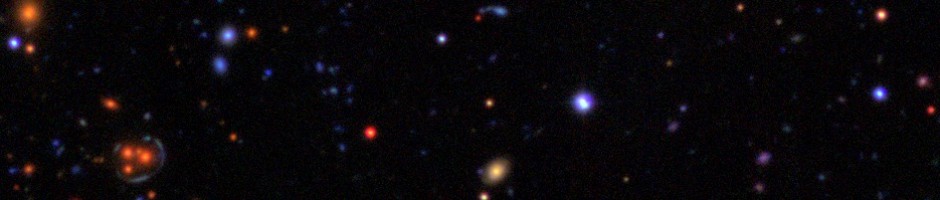
Space Warps ESA Euclid: 15,000 Strong Lenses found in Data Release 1!
We are so excited to share the strong lensing results of the first major data release from Euclid (called DR1-Foundation) that you have all contributed to with an incredible 5 million classifications after inspecting 240,000 images. You’ve found 15,000 strong lenses!
We are so humbled by your efforts which have been so significant to achieving this incredible sample of strong lenses. This is the largest sample of high grade strong lenses that have ever been discovered and you each played a part in achieving this goal. Thank you.
As you will see from the European Space Agency (ESA) and media outlets, today ESA and Euclid Consortium have released the first foundational release from the Euclid mission, This encompasses about thirteen months of observations with this innovative telescope optimised for mapping large areas of the celestial sky with very high quality imaging. This foundational Data Release 1 contains more than a billion astrophysical objects (including 900 million galaxies) over 1900 square degrees – which is about 5% of the sky or the area covered by 6 big dippers! With both imaging, that can tell us what kinds of objects are in the Universe, and spectroscopy, that tells us how far objects are away from us, what they are made up of and even how they move, Euclid data enables so much science. This data release is just the beginning of the largest ever 3D map of the sky.
The large area mapped, high quality space imaging and sensitive observations makes Euclid the perfect instrument to discover very rare objects such as strong lenses. Before Euclid, we were finding fewer than one good lens candidate per square degree of sky observed, on average. Euclid has increased that number to a whopping 8 per square degree! These 15,000 strong lenses are a stunning dataset. The team of international scientists thank you for your efforts. Once we had your classifications we were able to focus the team on looking at only the most promising candidates that you identified. As well as the 15,000 most reliable lens candidates, we also have thousands of possible candidates. Even more excitingly we know we haven’t found everything yet with even more data to come!
Over the next weeks, we’ll be sharing some of the team’s favourite candidates, in the meantime, you can browse at the papers that came out today and under the ECLIPSE series:
- the lens discovery method and samples are described in papers by Natalie Lines and Phil Holloway (ECLIPSE A & B)
- the usually very time intensive lens modelling sped up at scale by James Nightingale (ECLIPSE C)
- estimating the redshifts (distances to the lenses) as a preview to galaxy evolution studies by Angelos Nersesian (ECLIPSE D)
- And a paper showing the potential of NISP spectroscopy for strong lenses by Pietro Bergamini
You can find these papers, and more, including the DR1 Foundation webinar, on the Euclid website https://euclid-ec.net/ from 12 noon CET today.
Congratulations to each and everyone of you who have taken part in the Space Warps ESA Euclid search, we can’t thank you enough!
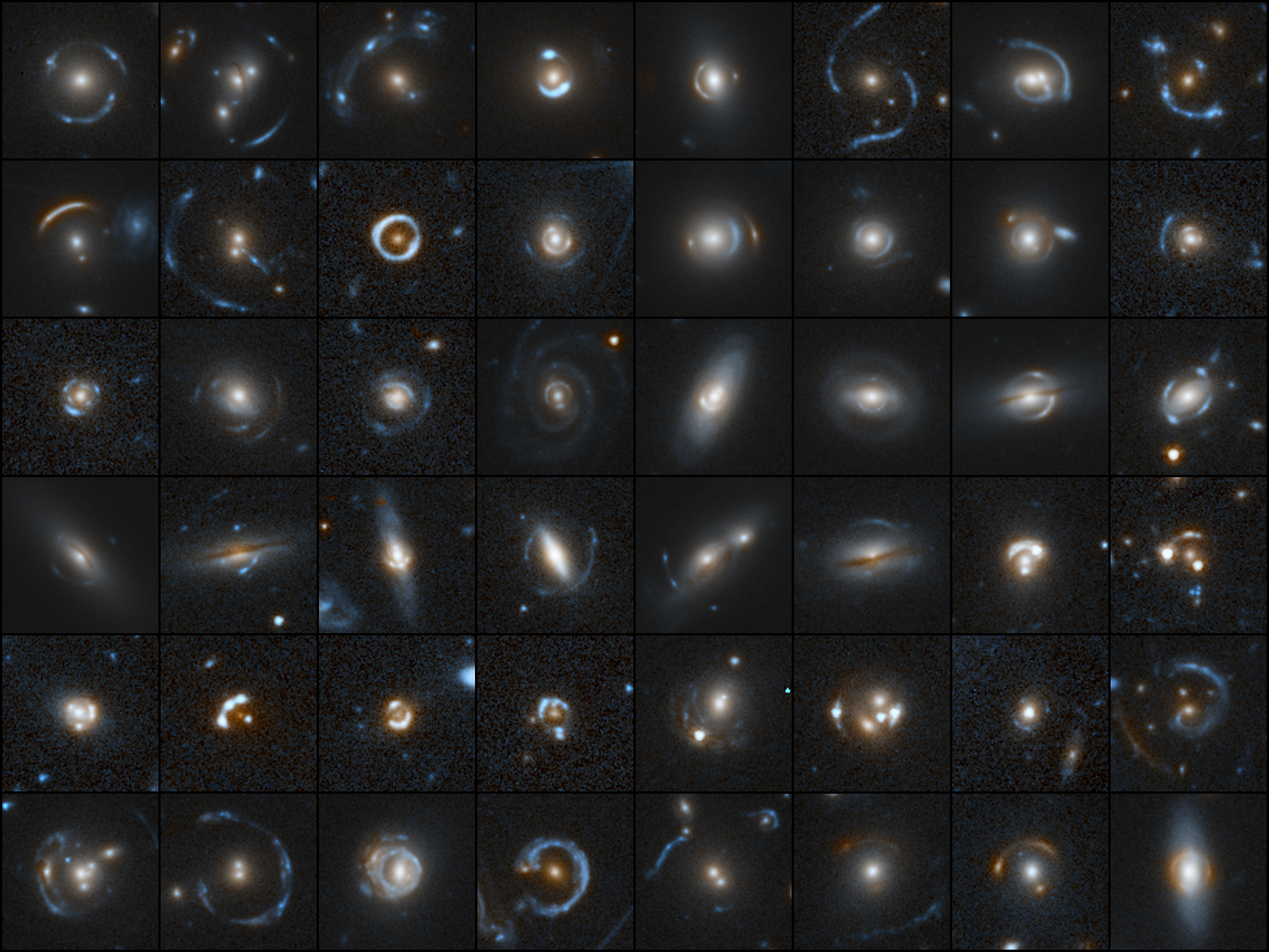
Credit: ESA/Euclid/Euclid Consortium/NASA, image processing by N. Lines and T. Li
An overview of Euclid’s DR1, and information on how to access the data released in the DR1-Foundation, can be found here: cosmos.esa.int/web/euclid/data-release-dr1
Data can be explored, visualised and analysed on Euclid Data Space euclid.dataspace.esa.int
All of Euclid’s data and associated images can be explored in full colour on ESASky sky.esa.int
More in-depth stories about DR1-Foundation can be found on the Euclid Consortium website: euclid-ec.org

